Customer stories and research from our work on AI-assisted engineering, agility and quality, with the numbers to back them up.
6 customer stories
Real engagements, real outcomes. See how teams cut regressions to zero, shipped 12× more often and made AI pay for itself.
2 published papers
What we learn from our assignments and experiments, written up and shared publicly.
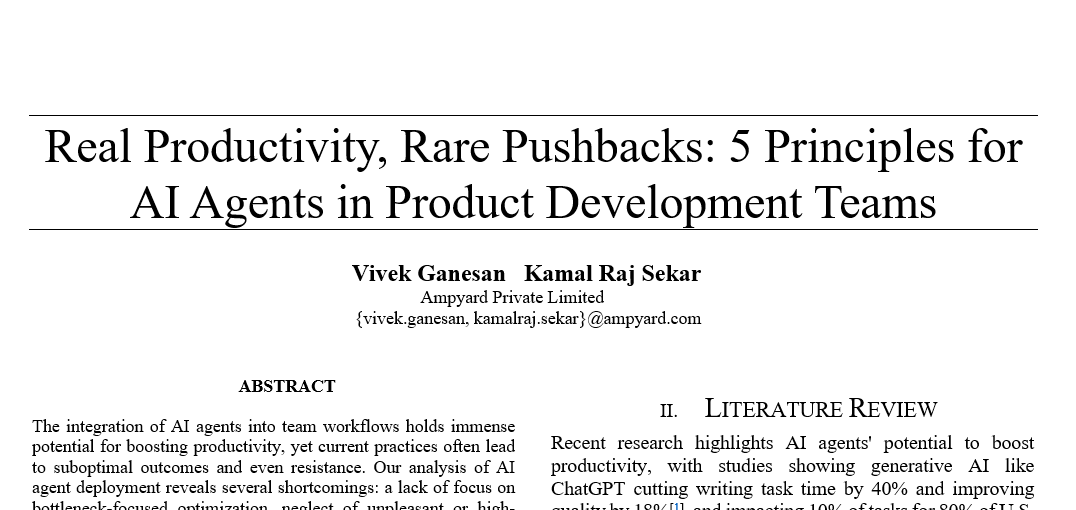
Real Productivity, Rare Pushbacks
5 Principles for AI Agents in Product Development Team
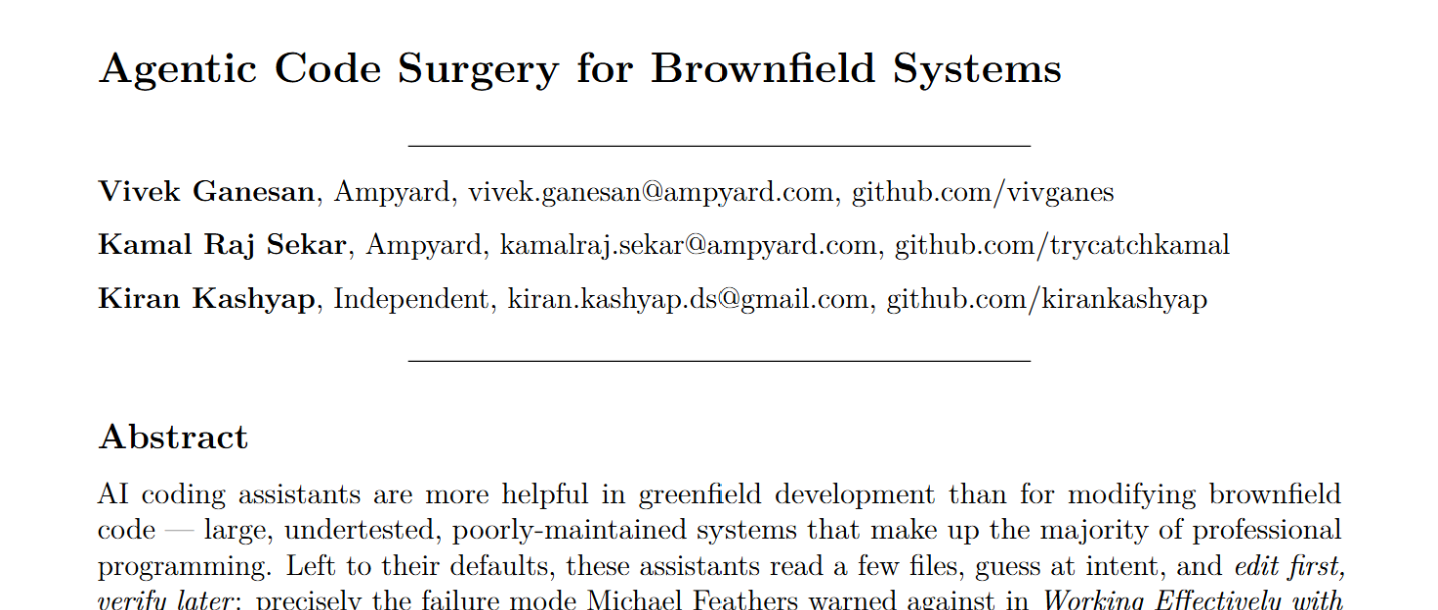
Agentic Code Surgery for Brownfield Systems
Our latest research and our most-read customer story.
AI coding assistants are more helpful in greenfield development than for modifying brownfield code — large, undertested, poorly-maintained systems that make up the majority of professional programming. Left to their defaults, these assistants read a few files, guess at intent, and edit first, verify later: precisely the failure mode Michael Feathers warned against in Working Effectively with Legacy Code [1]. We propose a seven-agent workflow — Plan, Map, Break, Cover, Implement, Refactor, Finish — that forces an AI assistant to follow Feathers' discipline: characterize existing behavior with tests before touching code. Each agent has a narrow scope, an explicit exit contract, and a file-based handoff to the next, with human review at every boundary. Applied to a real brownfield codebase, this workflow produced 43 new passing tests (raising statement coverage from 0.85% to 16.78%) against zero new tests and 0.82% coverage for a regular (plan and implement) approach, and avoided all critical and major bugs the regular approach introduced.
Read the paperA US product-based company wanted to move beyond AI experiments and make real business functions agentic, safely, and with engineering discipline.
Read the storyTell us where you are today. We'll show you what a measurable path forward looks like.
Talk to us